
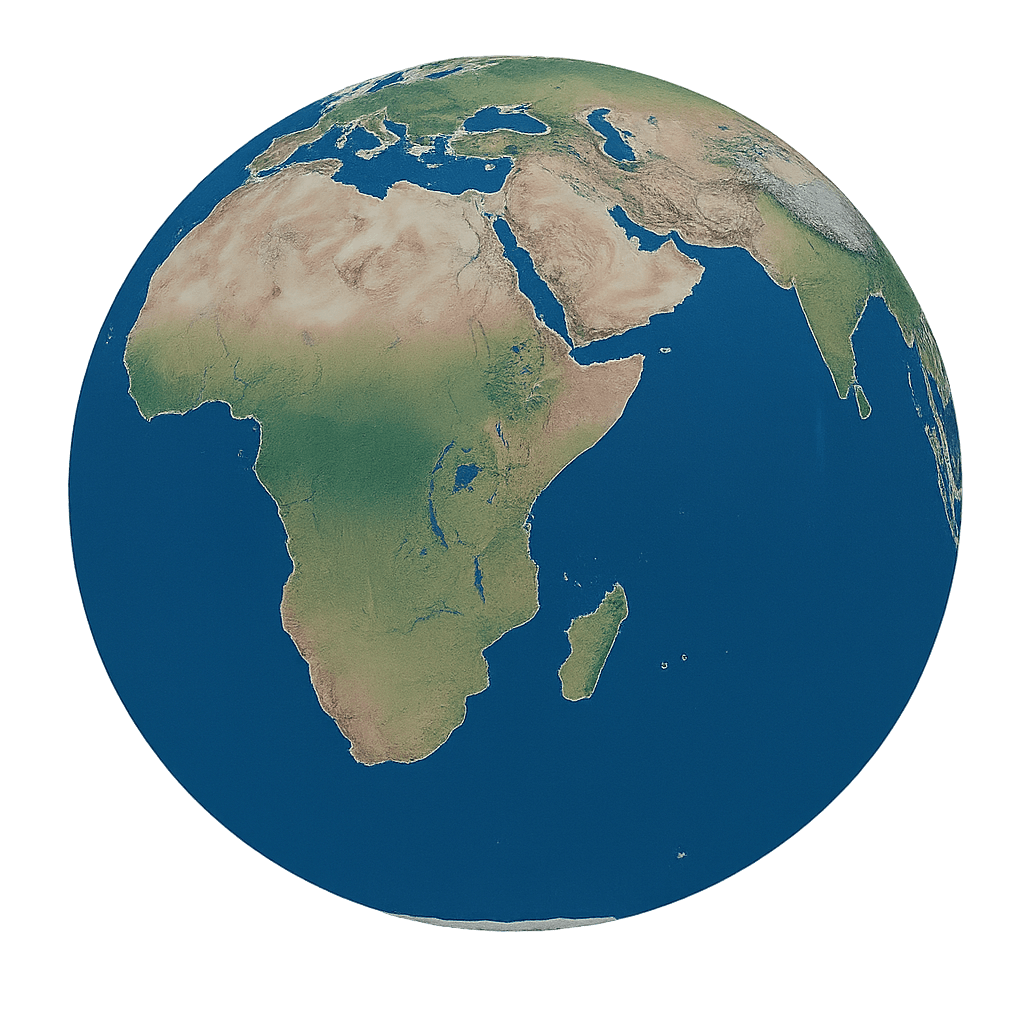
Fuel Supply: A convoy of 957 fuel tankers reached Bamako under military escort on October 10, bringing deliveries since September to 5,396. Officials have not confirmed that supplies are back to normal nationwide. Security: A reported drone strike on Malian army and Africa Corps positions near Soumpi has renewed questions about whether Russian military support can deliver lasting stability. The attack followed the army’s recapture of Kidal, but insecurity persists. Mining: Resolute Mining cut its production outlook after road insecurity and supply disruptions hit its Syama gold mine in southern Mali. Sport: Malian sports leader Habib Sissoko received an eighth dan in judo, recognising decades of work in the sport.
AGP Executive Report
Your go-to archive of top headlines, summarized for quick and easy reading.
Note: AI summary from news headlines; neutral sources weighted more to help reduce bias in the result. Feedback is welcome. Please let us know if you have any comments or suggestions about the AGP Executive Report.
Fuel Supply: A convoy of 957 fuel tankers reached Bamako under military escort, bringing deliveries since September to 5,396. Officials say the figures track arrivals, not a return to reliable supply nationwide. Security: A reported drone strike on Malian army and Africa Corps positions near Soumpi has renewed questions about whether Russian military support can deliver lasting stability. Displacement: The UN says displacement across the central Sahel has more than doubled in six years, amid attacks, climate shocks and funding shortages; Mali hosts many refugees fleeing Burkina Faso. Energy Policy: Mali’s government approved draft rules for energy labels on appliances and efficiency standards for buildings, aiming to curb electricity use and phase out inefficient products.
Security: A reported October 10 drone strike by the Azawad Liberation Front on Malian army and Africa Corps positions in Soumpi has revived questions about whether Russian military support can bring lasting security. Days earlier, JNIM and Islamic State fighters clashed near Tessit, while armed groups remain active despite the army’s recent return to Kidal. Humanitarian Crisis: UNHCR says displacement in the central Sahel has more than doubled in six years, driven by attacks, climate shocks and funding shortages. Mali’s Koro region hosted about 86,000 refugees from Burkina Faso in July. Energy Policy: Mali’s government approved draft rules to label the energy use of appliances and set efficiency standards for buildings, aiming to curb electricity consumption.
Displacement Crisis: UNHCR warns that displacement across the central Sahel has more than doubled since 2020, driven by attacks, climate shocks and funding shortages. Mali’s Koro region hosted about 86,000 refugees from Burkina Faso in July. Security: Fighting between JNIM and Islamic State in the Sahel near Tessit on October 9 highlights the armed groups’ continued reach and raises questions about the AES’s security promises, while civilians face insecurity and displacement. Energy: Mali’s government approved draft rules to label appliances by energy use and set efficiency standards for buildings, aiming to curb electricity costs and phase out wasteful equipment. Diplomacy: A recent analysis says Bamako is weighing US and Russian overtures while navigating Russia’s limits and Washington’s mixed approach. Cotton: Mali and India marked World Cotton Day at the UN, with discussions focused on rural livelihoods, local processing and helping producers capture more value.

Security: Fighting between JNIM and Islamic State in the Sahel near Tessit on October 9 underscored how armed groups continue to contest territory, despite the Alliance of Sahel States’ security pledges. Civilians remain exposed to violence and displacement. Earlier this week, Mali’s army retook Kidal after Tuareg separatists withdrew under Russian air pressure. Foreign Policy: Bamako is weighing US and Russian overtures, seeking to balance Washington’s interest in counterterrorism and minerals against Moscow’s growing role. Energy: The government approved draft rules to label appliances by energy use and set efficiency standards for new and renovated buildings, aiming to curb electricity costs and phase out inefficient products. Economy: Mali and India used a World Cotton Day event at the UN to discuss livelihoods and expanding local processing, with Mali highlighting efforts to retain more value from its cotton.
Northern Mali: Malian forces and Russian allies retook Kidal after Tuareg separatists withdrew under air pressure, a major shift that leaves the next phase of the conflict uncertain. Central Mali: JNIM claimed an IED strike near Baïma in Mopti on Oct. 8; the army had not confirmed the attack, and casualty figures were unavailable. Press Freedom: Mali jailed a publisher in a case tied to a neighbour’s insult, raising fresh concerns about space for journalism. Economy: Mali and India marked World Cotton Day at the UN with a focus on livelihoods and local processing. Mali also signed a reported $51.5 million contract for KAMAZ trucks, while Moody’s kept the country among four sub-Saharan sovereigns with a negative outlook.
Central Mali Conflict: JNIM claimed it hit a vehicle near Baïma in the Mopti region on October 8, but the Malian army has not confirmed the attack and casualties are unknown. The claim points to continuing threats on central Mali’s roads. Kidal: Malian forces and Russian allies have retaken the northern city after the Azawad Liberation Front withdrew under airstrikes. How long government forces can hold it remains uncertain. Economy: Moody’s raised its outlook for sub-Saharan Africa, but Mali is among four countries with a negative outlook, reflecting the uneven prospects across the region. Cotton and Infrastructure: Mali and India used a UN World Cotton Day event to discuss value addition and stronger cotton supply chains. Separately, Mali signed a $51.5 million contract for Kamaz trucks.
Kidal: Malian forces and Russia’s Africa Corps say they have retaken the northern city after an October offensive. The Azawad Liberation Front says it withdrew temporarily under heavy airstrikes; how long the government can hold Kidal remains uncertain. Life on the front lines: Research based on interviews in central Mali finds that conflict is shaped not only by counterterrorism, but also by local disputes over land and pasture. Communities have shifted between accommodation, armed self-defence and efforts to pursue dialogue. Transport and trade: State-owned SMTL signed a $51.3 million deal for KAMAZ vehicles, maintenance, spare parts and training, with a service centre planned for Bamako and an assembly plant a longer-term possibility. Education and land: Earlier reporting said 2,400 schools had closed amid insecurity. Mali is also among nine countries included in a new UN-backed Great Green Wall programme aiming to restore more than 270,000 hectares and support five million people.
Kidal: Malian forces and Russia’s Africa Corps say they have retaken the northern city after a weeklong advance and the separatist FLA’s withdrawal. The government’s challenge now is holding a city it lost again in April. Transport: State-owned SMTL signed a $51.3 million deal with Russia’s KAMAZ for vehicles, maintenance and training, with plans for a Bamako service centre. Education: More than 2,400 schools are closed, leaving about 730,000 children out of class, according to reports this week. Economy: Moody’s turned positive on the outlook for sub-Saharan Africa, but Mali remains among four rated countries with a negative outlook. Development: Mali is among nine countries in a new $78 million Great Green Wall programme targeting land restoration and livelihoods. A trans-Saharan fibre link connecting six countries, including Mali, has also gone live.
Kidal: Mali’s army, backed by Russia’s Africa Corps, has re-entered the northern city after Tuareg separatists withdrew under air pressure. The junta gains a symbolic victory, but control of Kidal does not mean control of the wider north, and the FLA says its withdrawal is temporary. Fuel and Transport: A recent analysis of the escorted convoy of more than 900 fuel tankers to Bamako underscores how exposed supply routes have become. Separately, state transport firm SMTL-SA signed a $51.5 million deal for Kamaz trucks, with workshops, assembly facilities and technical training planned in Bamako. Education: More than 2,400 schools remain closed amid insecurity, leaving about 730,000 children out of class as Mali’s new school year begins.
Kidal: Malian forces entered the strategic northern city on October 6 after the separatist Azawad Liberation Front announced a “controlled withdrawal,” citing the government’s air power. The advance, backed by Russia’s Africa Corps, is a symbolic gain for the junta but does not secure the wider region. Youth and Development: Mali is among eight West African pilot countries in a new ECA–UNFPA platform tracking progress on youth health, education, jobs and governance. Education: More than 2,400 schools remain closed amid insecurity, leaving about 730,000 children out of class. Food Security: Reports say 9.7 million people in Mali are poor and 1.56 million face acute hunger, with aid funding under pressure.
Kidal Frontline Update: Mali’s army says it has entered the strategic northern city of Kidal after the Azawad Liberation Front (FLA) announced a “controlled withdrawal,” reversing a major setback and raising fresh questions about the next phase of the war in northern Mali. Sahel Media & Information War: The Alliance of Sahel States (AES) has launched Tafouk TV, a joint media channel broadcasting from Bamako to counter disinformation and promote “information sovereignty” across Mali, Burkina Faso and Niger. Mali-Russia Economic Push: Russia’s Rosatom-linked plans for a lithium mine and processing plant at Bougoula in southern Mali point to deeper Sahel resource ambitions, though timelines and project certainty remain in the planning stage. Regional Diplomacy: Nigeria reaffirmed sustained diplomatic engagement with Mali, focusing on terrorism, organised crime, trafficking and cross-border threats, while also discussing ties with ECOWAS and the AES. Press Freedom Under Pressure: Reporters Without Borders highlights the case of Malian publisher Youssouf Sissoko, jailed after publishing an opinion piece targeting Niger’s military ruler, as Sahel media crackdowns intensify.
Press Freedom Under Pressure in Mali: Reporters Without Borders says Mali jailed publisher Youssouf Sissoko after his weekly L’Alternance ran an opinion piece critical of Niger’s military ruler, with charges tied to “false information” and “insulting a foreign head of state,” raising fresh alarms that journalism is being criminalised across the Sahel. Sahel Security Debate: A new analysis highlights Mali’s security paradox, arguing that despite Russia’s growing role since 2021, jihadist groups like JNIM still carry out major attacks, including a deadly camp assault near Dioura. Regional Media Push: Burkina Faso, Mali and Niger launched Tafouk TV in Bamako to promote their own narrative and counter Western coverage, broadcasting in French, English and local languages, with reported Russian backing. Education Crisis in Mali: Coverage says insecurity has shut more than 2,400 schools, leaving about 730,000 children out of class as extremists weaponise school closures. Health Cooperation: Ghana’s Ridge Hospital is strengthening neurosurgery capacity through collaboration with Malian specialists, supporting complex skull base procedures and skills transfer. Connectivity and Trade: A Port of Lomé push aims to strengthen Sahel corridors by meeting businesses in Niger, Burkina Faso and Mali, targeting smoother trade links for landlocked markets.
Sahel Security & JNIM: A new analysis says Mali’s security bargain with Russia is unraveling as JNIM keeps striking, including the Dioura camp attack that left heavy losses and exposed how durable protection promised by Bamako’s Russian-backed forces has not materialized. Regional Media & Influence: Burkina Faso, Mali and Niger launched Tafouk TV from Bamako to push their own Sahel narrative and counter Western coverage, with programming in French, English and local languages and open backing linked to Russia. Trade Corridors: The Port of Lomé is sending a Sahel business tour to Niger, Burkina Faso and Mali to strengthen corridor trade and logistics ties for landlocked markets. Education Crisis in Mali: Reports highlight that insecurity has shut over 2,400 schools, leaving about 730,000 children out of class. Humanitarian Pressure: UN funding updates warn of worsening conditions as Mali faces hunger pressures amid drying support.
BCEAO PI-SPI Rollout: The West African central bank has published a new list of 175 authorised institutions and payment providers to open services on the PI-SPI interoperable instant payments platform across UEMOA, with Senegal leading (43) and Mali listed with 19. PI-SPI Becomes Mandatory: A BCEAO update says PI-SPI use will be compulsory from November 2 for interoperable electronic money transfers within UEMOA, alongside a revised fee schedule that makes many small daily transfers free. Mali Mining Under Pressure: Resolute Mining’s latest update keeps Mali’s Syama mine in focus after the company cut production guidance, citing difficult operating conditions, while adjusting costs and pointing to corrective steps. Sahel Security and Russia Scrutiny: Coverage continues to question Russia’s Sahel role as reports describe setbacks for Russia-linked forces and wider use of AI for influence operations across parts of Africa. Regional Trade Watch: Benin’s Cotonou port is reported to have surged in 2025 traffic (+52%) and sharply increased transshipment, exports and vessel calls—signals that Gulf of Guinea logistics are shifting. Education Crisis in Mali: New reporting highlights Mali’s school closures, with thousands of schools shut and hundreds of thousands of children kept out by insecurity.
Mali Education Crisis: Mali is facing a tipping-point school shutdown as insecurity keeps 2,400+ schools closed, leaving about 730,000 children out of class, with extremists increasingly weaponizing the closures. Humanitarian Aid: The UN released $160 million from its emergency fund for 12 crisis-hit countries, including Mali, to support life-saving assistance and make aid more accessible for people with disabilities. Regional Finance & Procurement: UEMOA/BCEAO moved to speed up public spending and payments: a new procurement directive was adopted, and PI-SPI instant payments became mandatory from Nov. 2 with revised fees. Sahel Food Pressure: Mali’s hunger situation is worsening as funding gaps and insecurity collide, with reports warning millions face acute food needs. Russia Influence Watch: New reporting highlights how Russia-linked networks are using modern tools and partnerships across the Sahel, adding pressure to Mali’s security and political landscape.
Humanitarian Push: The UN released $160 million from its emergency fund to support 12 underfunded crises, including Mali, with $10m earmarked to help people with disabilities access aid. Sahel Logistics & Trade: Togo’s Port of Lomé is being positioned as a Russia-linked transit gateway to Sahel markets, with officials discussing transport corridors, costs, and infrastructure after a Lomé–Moscow cooperation push. Regional Energy Moves: Algeria’s state energy firm Sonelgaz signed deals with Senegal’s Senelec, extending Algeria’s growing energy footprint across West Africa, including earlier links to Mali. Education Under Strain: Coverage highlights Mali’s school crisis, with over 2,400 schools shut and 730,000 children staying home as insecurity disrupts the new school year. Governance & Accountability: In a separate procurement crackdown, six construction companies were blacklisted for contract violations, showing tighter enforcement in public works.
Education Crisis in Mali: Mali opened the 2026-2027 school year with more than 2,400 schools unable to receive pupils, as insecurity keeps spreading—an especially painful blow since the transition has declared the year “Education and Culture.” Humanitarian Funding: The UN released $160 million in emergency aid via CERF for 12 underfunded crises, including $10 million for Mali, warning that money alone won’t reach people without political will and safe access. Regional Policy Reform (UEMOA): UEMOA finance ministers adopted a directive to speed up public procurement across member states, including Mali, aiming to improve how investment budgets are used. STEM Backslide Across West Africa: A regional education trend shows fewer students choosing science tracks, with Mali among countries seeing interest in science dwindle—raising concerns about future engineers and researchers. Energy Partnerships: Algeria’s Sonelgaz signed MoUs with Senegal’s Senelec, extending its West Africa footprint that already includes Mali, fueling debate over energy sovereignty and regional competition.
Humanitarian Relief: The UN released $160 million from its emergency fund to support life-saving aid in 12 underfunded crises, including Mali ($10m), as OCHA warns that money alone won’t reach people without political will and safe access. Education Under Pressure: Mali’s school year has started with over 2,400 schools closed, leaving hundreds of thousands of children out of class as insecurity keeps spreading, undermining the government’s “Year of Education and Culture.” Regional Procurement Reform: UEMOA finance ministers adopted a directive to speed up public procurement across member states, including Mali, with reforms requiring national legal transposition. Sahel Security & Diplomacy: Mali’s foreign minister again accused external backers of supporting terrorism in the Sahel, as regional debate continues over who is fueling instability. Mining & Investment Watch: Mali-linked business coverage highlights ongoing momentum around lithium production in Bougouni and broader interest in Sahel resources.
Humanitarian Relief: The UN released $160 million in emergency funding for 12 underfunded crises, including $10m for Mali, warning that money alone won’t reach people unless access barriers are removed and leaders show political will. Education Crisis in Mali: Mali’s 2026-2027 school year opened with over 2,400 schools closed, leaving 730,000 children out of class as insecurity and jihadist expansion keep classrooms out of reach. Sahel Security & Accountability: A UN report accuses AFC/M23 of systematically targeting civilians in eastern DRC, describing reprisals, forced displacement and home destruction that deepen humanitarian strain. Mali’s Resource Push: Rosatom says it plans a lithium project in Bugula with feasibility work in 2027 and construction from 2028, aiming to produce spodumene concentrate for the battery supply chain. Russia–Africa Diplomacy: Russia says the third Russia–Africa summit will set new partnership priorities and pave the way for agreements and contracts.
Sign up for:
Mali Daily Times
The daily local news briefing you can trust. Every day. Subscribe now.
Check Your Email!
We sent a one-time activation link to: .
Confirm it's you by clicking the email link.
If the email is not in your inbox, check spam or try again.
Welcome back!
is already signed up. Check your inbox for updates.